
Quick Answer
One cup of all-purpose flour weighs 120 grams when it is spooned into the cup and levelled off — the method King Arthur Baking’s test kitchen uses, and the method most modern American recipes assume. The USDA lists the same cup at 125 grams, so published figures run from 120 to 125 grams, and the 5-gram difference is too small to matter in almost any recipe. The number changes completely if you fill the cup differently: scooping the cup straight out of the bag packs the flour down and can push one cup to 140–160 grams, which is up to a third more flour than the recipe expects. That is why bakers weigh flour instead of scooping it — 120 grams is always 120 grams, no matter how the flour was poured.
The Short Answer: 120 Grams (With One Small Catch)
If you remember one number from this article, make it 120 grams. That is the weight of one US cup of all-purpose flour, spooned and levelled, according to King Arthur Baking’s ingredient weight chart — the chart most American recipe developers, cookbook authors, and baking schools treat as the standard. In ounces, that is 4 1/4 oz.
But you have probably seen other numbers, and none of them are wrong. Here is why the same cup of flour can be listed at 120, 125, or even 130 grams:
| Source | 1 cup all-purpose flour | How they fill the cup |
|---|---|---|
| King Arthur Baking | 120 g (4 1/4 oz) | Spooned into the cup, levelled off |
| USDA FoodData Central | 125 g (4.41 oz) | Dipped and scooped, unsifted |
| Older cookbooks (e.g. Joy of Cooking) | 125 g | Spooned and levelled, older wheat |
| Food Network baking guide | 125–130 g | Range across methods |
| Scooped straight from the bag | 140–160 g | Cup dipped into the bag, packed down |
| Sifted first, then measured | 100–110 g | Sifted, then spooned and levelled |
The flour does not change. The way it is packed into the cup changes. Flour is mostly air — tiny particles with gaps between them — so the same cup can hold very different amounts depending on how much air you squeeze out. Understanding that one fact explains every conflicting number you will ever see, and it is the difference between a tender cake and a dry, dense one.
Why a Cup of Flour Does Not Weigh the Same as a Cup of Water
A cup measures volume — how much space something takes up. A gram measures weight — how much mass something has. The two are connected only by density, and flour is far less dense than water.
One US cup holds 236.6 millilitres. Fill it with water and it weighs about 237 grams, because water weighs almost exactly 1 gram per millilitre. Fill the same cup with all-purpose flour and it weighs only about 120 grams — roughly half — because flour’s density is around 0.53 grams per millilitre. The cup is full in both cases; the flour just contains far more air.
This is also why there is no single “cups to grams” number that works for everything. A cup of honey weighs about 340 grams. A cup of granulated sugar weighs about 200 grams. A cup of butter weighs about 227 grams. The cup never changes — the ingredient does. Any converter that gives you a grams figure without asking which ingredient you mean is guessing, and for flour the guess is usually wrong.
How Many Grams in a Cup of Flour by Type
Not all flours weigh the same. A cup of cake flour is lighter than a cup of whole wheat flour because the particles are finer and trap more air; a cup of coconut flour is far heavier because it is dense and absorbent. The table below uses King Arthur Baking’s spoon-and-level weights as the standard, with USDA figures where they differ.
| Flour type | 1 cup (spooned & levelled) | USDA figure | Notes |
|---|---|---|---|
| All-purpose flour | 120 g | 125 g | The default for most recipes |
| Bread flour | 120 g | 137 g | Same as AP by King Arthur; heavier by USDA |
| Whole wheat flour | 113 g | 120 g | Lighter than AP despite the bran |
| Cake flour | 100 g | 120 g | Finest grind, most air, lightest wheat flour |
| Self-rising flour | 125 g | — | AP flour plus salt and baking powder |
| Rye flour | 102 g | — | Light and powdery |
| Almond flour | 96 g | — | Nut flour; much lighter than wheat flour |
| Oat flour | 92 g | — | Light and fluffy; varies by grind |
| Buckwheat flour | 120 g | — | Despite the name, not a wheat flour |
| Coconut flour | 128 g | — | Very dense; absorbs huge amounts of liquid |
| Pastry flour | 110 g | — | Between cake and all-purpose |
Two things stand out. First, the wheat flours cluster between 100 and 125 grams — close enough that swapping them changes a recipe only slightly. Second, the non-wheat flours are a different world: almond flour at 96 grams and coconut flour at 128 grams are nearly 30 grams apart per cup, which is why gluten-free baking recipes almost always give weights rather than volumes. If a recipe says “1 cup almond flour,” do not substitute 120 grams — use 96.
Cup Fractions: How Many Grams Is Half a Cup, a Third, and So On
Most recipes do not call for exactly one cup. Here is the full conversion for all-purpose flour at the King Arthur standard of 120 grams per cup, spooned and levelled. These numbers scale cleanly because the 120-gram figure divides well.
| Amount | All-purpose flour | Bread flour | Whole wheat flour | Cake flour |
|---|---|---|---|---|
| 1 tablespoon | 7.5 g | 7.5 g | 7 g | 6 g |
| 1/4 cup | 30 g | 30 g | 28 g | 25 g |
| 1/3 cup | 40 g | 40 g | 38 g | 33 g |
| 1/2 cup | 60 g | 60 g | 57 g | 50 g |
| 2/3 cup | 80 g | 80 g | 75 g | 67 g |
| 3/4 cup | 90 g | 90 g | 85 g | 75 g |
| 1 cup | 120 g | 120 g | 113 g | 100 g |
| 1 1/2 cups | 180 g | 180 g | 170 g | 150 g |
| 2 cups | 240 g | 240 g | 226 g | 200 g |
| 3 cups | 360 g | 360 g | 339 g | 300 g |
| 4 cups | 480 g | 480 g | 452 g | 400 g |
A quick mental shortcut: for all-purpose flour, multiply the number of cups by 120. Two cups is 240 grams. Three cups is 360 grams. Half a cup is 60 grams. If your recipe uses the USDA figure instead, multiply by 125 — the difference on a 3-cup recipe is only 15 grams, about one tablespoon, which will not ruin anything.
The Spoon-and-Level Method: How to Measure a True 120-Gram Cup
The 120-gram figure only holds if you measure the way King Arthur’s test kitchen measures. The method is called spoon and level, and it takes about ten seconds:
- Fluff the flour first. Stir it in the bag or canister with a spoon or whisk. Flour settles and compacts in storage, and fluffing puts the air back in.
- Spoon it into the measuring cup. Use a large spoon to drop flour loosely into a dry measuring cup until it mounds above the rim. Never dip the cup into the bag.
- Level it off. Sweep the flat edge of a knife across the rim in one smooth motion, letting the excess fall back into the bag.
- Do not tap, shake, or pack. Tapping the cup settles the flour and adds weight — exactly what you are trying to avoid.
That is it. A cup measured this way holds about 120 grams of all-purpose flour, and it matches what the recipe developer measured when they wrote the recipe. Most professional bakers skip the cup entirely and weigh the flour on a scale, which is the same result with zero technique involved.
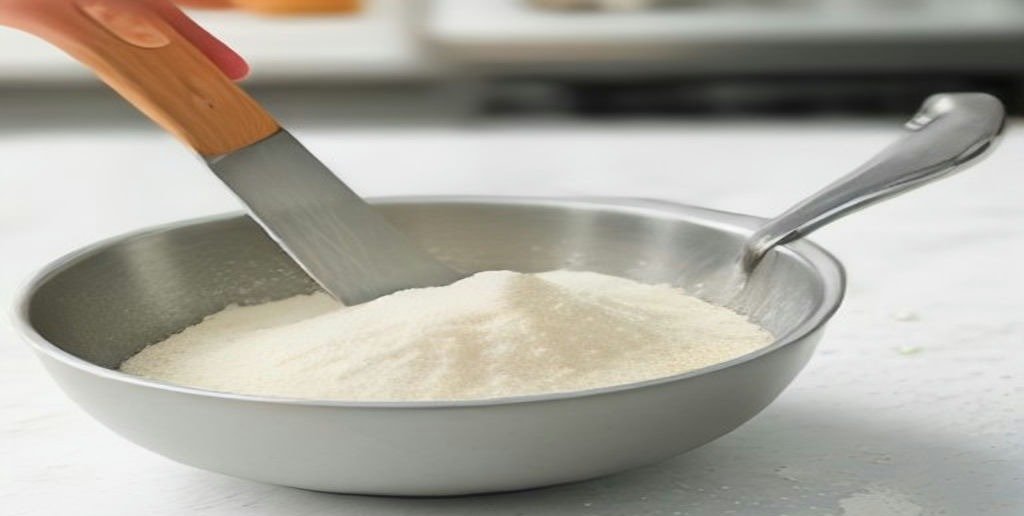
What Happens When You Scoop Instead
Scooping — plunging the measuring cup directly into the flour bag and levelling off — is the most common way home bakers measure flour, and it is the single biggest source of failed bakes. King Arthur’s test kitchen found that a scooped, compacted cup can hold up to 160 grams of all-purpose flour. Other tests put the scooped range at 140–155 grams. Either way, that is 20–40 grams extra per cup — roughly 25% more flour than the recipe calls for.
Here is what that extra flour does to a bake:
| Extra flour per cup | Effect on the bake |
|---|---|
| 10–15 g | Slightly drier crumb; usually unnoticeable |
| 20–30 g | Noticeably dry, dense texture; cookies spread less |
| 30–40 g | Tough, heavy crumb; cakes dome and crack; bread is dry |
| 40+ g | Dry, crumbly result; dough may not come together at all |
One cup of flour can vary from about 110 grams (sifted, spooned) to about 165 grams (scooped and packed) — a 50% swing from the same measuring cup. No other common baking ingredient varies this much. That is why experienced bakers say that cups are the biggest source of failed bakes, and why every serious baking book published in the last twenty years lists weights alongside volumes.
Sifted vs Unsifted: Does Sifting Change the Weight?
Yes — sifting makes a cup of flour lighter, because it breaks up clumps and adds air. A cup of all-purpose flour that has been sifted before measuring weighs roughly 100–110 grams, about 10–15% less than the 120-gram spooned cup. The exact number depends on how fine the sifter is and how much you fluff the flour afterwards.
This matters because recipes use the words “sifted” and “unsifted” in two different places, and they mean different things:
- “1 cup sifted flour” means sift the flour first, then measure one cup. You will use about 100–110 grams.
- “1 cup flour, sifted” means measure one cup (120 grams), then sift it. You still use 120 grams — the sifting is just to remove lumps and aerate it before mixing.
Modern recipes rarely call for sifting because today’s flour is milled finely and pre-sifted at the factory. If a recipe does call for it, the order of the words tells you which weight to use. When in doubt, weigh 120 grams per cup and sift it afterwards — that matches the way most recipe developers test their recipes today.
Does the Brand or Type of Wheat Change the Weight?
Slightly, but not enough to worry about. Bleached and unbleached all-purpose flour weigh the same per cup — bleaching changes colour and protein behaviour, not density. Store brands and premium brands are within a gram or two of each other when measured the same way.
Three things do move the number a little:
- Humidity. Flour absorbs moisture from the air. In a humid summer kitchen, a cup of flour can weigh a few grams more than the same cup in dry winter air. The difference is small — usually under 5 grams per cup — and it is one more reason to weigh rather than scoop.
- How long the bag has sat. Flour settles under its own weight in storage. A bag that has sat untouched for weeks will be more compacted than one you stir every day. Fluffing before measuring fixes this.
- Protein content. Southern US all-purpose flours (such as White Lily) are milled from soft wheat and are slightly lighter and finer than northern hard-wheat flours. The difference is a few grams per cup at most.
None of these variations comes close to the 20–40 gram error from scooping. Technique matters far more than brand.
Converting a Recipe From Cups to Grams
If a recipe lists only cups and you want the accuracy of weighing, convert each flour amount at 120 grams per cup. Here is a worked example — a simple loaf cake:
| Ingredient in the recipe | Cups | Grams (120 g/cup) |
|---|---|---|
| All-purpose flour | 2 cups | 240 g |
| Granulated sugar | 1 cup | 200 g |
| Butter, softened | 1/2 cup | 113 g |
| Milk | 3/4 cup | 180 g |
| Cocoa powder | 1/4 cup | 21 g |
A few notes on that table. Sugar and butter have their own conversions — sugar is about 200 grams per cup and butter about 227 grams per cup (one stick of butter is 113 grams, which is half a cup). Milk is close to water, so 3/4 cup is about 180 grams. Cocoa powder is very light at about 84 grams per cup. Converting a whole recipe takes two minutes, and it makes the recipe repeatable: the second time you bake it, you get exactly the same cake.
The reverse conversion is just as easy. If a recipe from a European cookbook calls for 250 grams of flour, divide by 120: that is just over 2 cups. For 500 grams, use 4 cups plus a tablespoon or two (4 cups is 480 grams; the extra 20 grams is about 2 1/2 tablespoons).
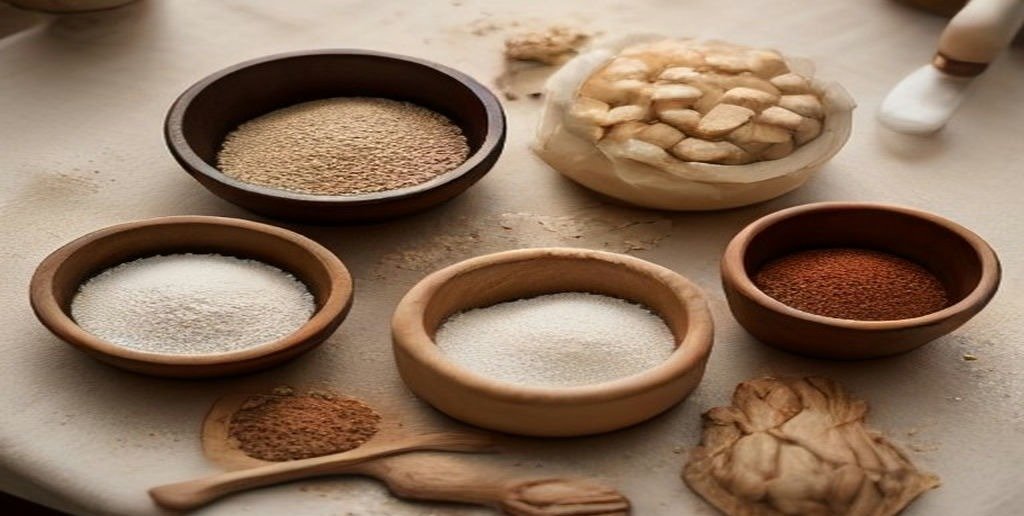
A Cup of Flour vs a Cup of Other Ingredients
The fastest way to see why cups are unreliable is to line up what one level US cup of common baking ingredients actually weighs:
| Ingredient (1 level US cup) | Grams | Ounces |
|---|---|---|
| Water | 237 g | 8.0 oz |
| Honey | 340 g | 12.0 oz |
| Butter | 227 g | 8.0 oz |
| Granulated sugar | 200 g | 7.1 oz |
| Brown sugar, packed | 213 g | 7.5 oz |
| All-purpose flour | 120 g | 4.25 oz |
| Whole wheat flour | 113 g | 4.0 oz |
| Cake flour | 100 g | 3.5 oz |
| Almond flour | 96 g | 3.4 oz |
| Old-fashioned oats | 89 g | 3.1 oz |
| Cocoa powder | 84 g | 3.0 oz |
Honey weighs nearly three times as much as the same cup of flour. Cocoa powder weighs less than a third of the honey. A recipe that says “1 cup” is giving you a volume — and unless you know the ingredient’s density, the volume tells you almost nothing about how much of it you are actually adding. That is the whole argument for a kitchen scale in one table.
US Cup vs Metric Cup: A Hidden Trap
There is one more source of confusion, and it catches people converting recipes between American and international sources. A US cup holds 236.6 millilitres. A metric cup, used in Australia, New Zealand, and Canada, holds 250 millilitres — about 6% more.
That means:
| Cup type | Volume | All-purpose flour weight |
|---|---|---|
| US cup | 236.6 mL | 120 g |
| Metric cup | 250 mL | ~127 g |
| UK imperial cup (historic) | 284 mL | ~144 g |
If you are following an Australian recipe that calls for “1 cup flour” and you measure with a US cup, you will be about 7 grams short per cup. Over three cups, that is 21 grams — noticeable but not fatal. The fix is simple: if a recipe comes from a metric country, use 127 grams per cup, or just weigh the flour and ignore the cup entirely.
Do You Need a Kitchen Scale?
Strictly speaking, no — the spoon-and-level method gets you to 120 grams reliably enough for most home baking. But a digital kitchen scale costs less than a bag of good flour, and it removes the single largest variable in baking. Here is the honest case for and against:
Why a scale wins:
- 120 grams is 120 grams no matter who measures it, in any humidity, from any bag.
- It is faster than spooning and levelling — pour until the display reads 120.
- It makes recipes repeatable, which is the whole point of a recipe.
- It handles awkward ingredients (honey, butter, sourdough starter) that cups measure badly.
Why cups still work:
- Spoon-and-level gets you within 5 grams of the target, which is fine for cookies, muffins, and quick breads.
- Most American recipes are still written in cups, so you will convert anyway.
- If you bake rarely, a scale is one more gadget in a drawer.
If you buy one, get a digital scale that reads in 1-gram increments and has a tare button. Put the bowl on the scale, press tare to zero it, and pour flour until the display reads the target weight. That is the entire technique, and it is the method every professional bakery uses.
Common Mistakes That Change the Weight
Even careful bakers make these errors. Each one pushes the flour weight away from 120 grams:
- Using a liquid measuring cup. Liquid cups are meant to be filled to a line, not levelled — you cannot level flour in one, so you guess. Always use dry measuring cups (the nested metal or plastic set) for flour.
- Scooping from the bag. The number-one error. Adds 20–40 grams per cup. Spoon and level instead.
- Tapping the cup to settle the flour. It feels tidy, but it packs the flour down and adds 10–15 grams.
- Measuring flour straight from a freshly opened bag. Freshly milled and bagged flour is fluffy; settled flour is dense. Fluff it with a spoon first either way.
- Packing brown sugar habits into flour. Brown sugar is supposed to be packed into the cup. Flour is not. Different ingredients, different rules.
- Forgetting the flour is already in the bowl. When a recipe says to add flour to a mixture in stages, weigh each addition separately rather than eyeballing it.
How Many Grams Does a Cup of Flour Weigh in Common Recipes?
To make the number concrete, here is what the flour in familiar bakes actually weighs when measured correctly:
| Bake | Flour in the recipe | Weight (120 g/cup) |
|---|---|---|
| Chocolate chip cookies (one batch) | 2 1/4 cups AP | 270 g |
| Vanilla sponge cake | 2 cups AP | 240 g |
| Banana bread (one loaf) | 1 3/4 cups AP | 210 g |
| Pancakes (serves 4) | 1 1/2 cups AP | 180 g |
| Pizza dough (two bases) | 3 cups bread flour | 360 g |
| Whole wheat sandwich loaf | 3 cups whole wheat | 339 g |
| Angel food cake | 1 cup cake flour | 100 g |
| Shortbread | 2 cups AP | 240 g |
If your cookies always come out dry and cakey, check your flour measurement before you blame the recipe. Two and a quarter cups of scooped flour can easily be 320–350 grams instead of 270 — that is an extra half-cup of flour hiding in the dough.
The Bottom Line
One cup of all-purpose flour weighs 120 grams when spooned and levelled, or 125 grams by the USDA’s measure. Use 120 grams as your default — it is the standard most modern American recipes are written around, and the 5-gram difference will not change your bake. What will change your bake is how you fill the cup: scooping can add up to 40 extra grams per cup, and that is the difference between tender and tough.
So the practical rules are simple. If you use cups, spoon the flour in and level it off — never scoop from the bag. If you want the result to be the same every single time, put the bowl on a scale and weigh 120 grams per cup. And if a recipe gives you grams, use them: the recipe developer already did the hard work of removing the guesswork. Your cakes will thank you.
Frequently Asked Questions
How many grams does a cup of flour weigh?
One cup of all-purpose flour weighs 120 grams when spooned into the cup and levelled off (King Arthur Baking’s standard), or 125 grams according to the USDA. The difference comes from how the cup is filled, not from the flour itself.
How many grams is a cup of bread flour?
One cup of bread flour weighs 120 grams by King Arthur’s spoon-and-level standard, or 137 grams by the USDA. For most recipes, use 120 grams per cup, the same as all-purpose flour.
How many grams is a cup of whole wheat flour?
One cup of whole wheat flour weighs 113 grams (King Arthur) or 120 grams (USDA). It is slightly lighter per cup than all-purpose flour despite the bran, because the particles do not pack as tightly.
How many grams is a cup of cake flour?
One cup of cake flour weighs 100 grams (King Arthur) or 120 grams (USDA). Cake flour is the lightest wheat flour because it is milled very fine and traps the most air.
How many grams is half a cup of flour?
Half a cup of all-purpose flour weighs 60 grams spooned and levelled. A quarter cup is 30 grams, a third of a cup is 40 grams, and three-quarters of a cup is 90 grams.
Why do some sources say 125 grams and others 120 grams?
King Arthur Baking measures flour spooned and levelled (120 g), while the USDA measures it dipped and scooped (125 g). Both are correct for their own method. The 5-gram gap is about a teaspoon of flour and will not affect most recipes.
How many grams does a scooped cup of flour weigh?
A cup scooped straight from the bag weighs 140–160 grams, up to a third more than the 120-gram spooned cup. Scooping packs the flour down, which is why scooped flour makes bakes dry and dense.
Does sifted flour weigh less?
Yes. A cup of all-purpose flour sifted before measuring weighs about 100–110 grams, roughly 10–15% less than an unsifted spooned cup, because sifting adds air. Note that “1 cup flour, sifted” still means 120 grams — you measure first, then sift.
How many grams is a cup of almond flour?
One cup of almond flour weighs about 96 grams, much lighter than wheat flour. Coconut flour is the opposite — about 128 grams per cup. Non-wheat flours vary so much that recipes using them should always be weighed.
Is 120 grams of flour the same as 120 millilitres?
No. Grams measure weight and millilitres measure volume. One cup of flour is 236.6 millilitres by volume but only about 120 grams by weight, because flour is roughly half as dense as water. Never swap grams and millilitres for dry ingredients.
