
Quick Answer
Yes — plug-in heaters use a lot of electricity compared with almost every other appliance in your home. A standard 1,500-watt plug-in heater uses 1.5 kilowatt-hours (kWh) of electricity for every hour it runs on high. At the current U.S. average residential rate of 18.16 cents per kWh (EIA, August 2026), that is about $0.27 per hour, $2.18 for 8 hours, or about $65 a month if you run it 8 hours a day. A smaller 750-watt heater on low costs roughly half that — about $33 a month at the same usage. The good news: most heaters do not run at full power all the time, because the thermostat cycles the heating element on and off once the room warms up, so real bills are often lower than the label suggests.
Introduction
Plug-in heaters feel cheap. They cost $30 to $80 at the store, they plug into any wall outlet, and they warm a cold room in minutes. But the purchase price is the smallest part of what a plug-in heater costs you. The real cost shows up on your electricity bill — and for many people it is a shock, because a space heater is one of the highest-draw appliances you can plug into a standard household outlet.
This guide answers the question properly, with real numbers. You will see exactly how many watts plug-in heaters use, what that costs per hour, per day and per month at today’s electricity rates, how the cost changes from state to state, why your actual bill is usually lower than the worst-case maths, and how to use a plug-in heater without wasting money or tripping a breaker. Every figure below is calculated from the wattage on the heater’s label and the U.S. Energy Information Administration’s published residential electricity rates — no guessing, and every table shows its working so you can redo the maths with your own rate.
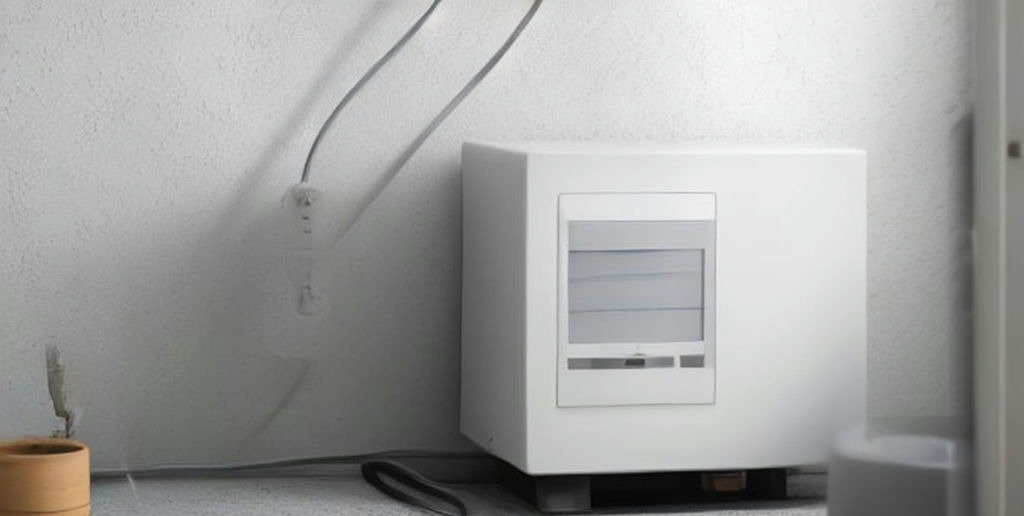
How Much Power Do Plug-In Heaters Use?
Most plug-in electric heaters sold in the United States draw between 750 and 1,500 watts. The 1,500-watt figure is not an accident: it is the practical maximum for a standard 15-amp household circuit. A 1,500-watt heater on a 120-volt outlet draws 12.5 amps (1,500 ÷ 120 = 12.5), which already takes up most of a 15-amp circuit by itself. Push past that and you risk tripping the breaker — which is why you almost never see a plug-in heater rated above 1,500 watts.
| Heater size | Typical wattage | Best fit | Rough room size |
|---|---|---|---|
| Personal / low | 500–750W | Desk area, under-desk use, short spot heating | About 75–100 sq. ft. |
| Medium | 1,000–1,200W | Bedroom, home office, den | About 100–150 sq. ft. |
| Full-size / high | 1,500W | Standard living room or large bedroom | About 150–200 sq. ft. |
The important thing to understand is that wattage is the whole story for electricity use. A 1,500-watt heater uses 1.5 kWh per hour whether it is ceramic, oil-filled, infrared or fan-forced. The heater type changes how the heat feels and how fast the room warms up — it does not change the electricity bill at the same wattage. Any heater that claims to heat the same room with far less electricity is either running at a lower wattage (and producing less heat) or the claim is simply wrong: electric resistance heating turns essentially 100% of its electricity into heat, so there is no efficiency trick to find.
To put 1,500 watts in context, here is what other common appliances draw:
| Appliance | Typical wattage |
|---|---|
| LED light bulb | 10–15W |
| Laptop | 50–100W |
| Large flat-screen TV | 100–200W |
| Refrigerator (running) | 150–200W |
| Microwave | 1,000–1,200W |
| Hair dryer | 1,500–1,800W |
| Plug-in heater on high | 1,500W |
A single plug-in heater on high uses roughly as much power as a hair dryer running non-stop, and about ten times as much as a refrigerator. That is why the answer to “do plug-in heaters use a lot of electricity” is yes — by household standards, they are among the hungriest things you can plug in.
From Watts to Dollars: The Only Formula You Need
Your electricity bill is measured in kilowatt-hours (kWh), not watts. The formula is simple:
kWh = (watts × hours) ÷ 1,000
Cost = kWh × your electricity rate
So a 1,500-watt heater running for 1 hour uses (1,500 × 1) ÷ 1,000 = 1.5 kWh. At the U.S. average residential rate of 18.16 cents per kWh (EIA, August 2026), that hour costs 1.5 × $0.1816 = $0.27.
Cost by wattage (at the U.S. average rate of 18.16¢/kWh)
| Heater wattage | kWh per hour | Cost per hour | Cost for 8 hours | Cost for 30 days at 8 hr/day | kWh per month |
|---|---|---|---|---|---|
| 500W | 0.5 | $0.09 | $0.73 | $21.79 | 120 |
| 750W | 0.75 | $0.14 | $1.09 | $32.69 | 180 |
| 1,000W | 1.0 | $0.18 | $1.45 | $43.58 | 240 |
| 1,200W | 1.2 | $0.22 | $1.74 | $52.30 | 288 |
| 1,500W | 1.5 | $0.27 | $2.18 | $65.38 | 360 |
Two things jump out of that table. First, the low setting roughly halves the cost: a 1,500-watt heater switched to its 750-watt low setting costs about $33 a month instead of $65 at 8 hours a day. Second, 360 kWh a month for one heater is a large chunk of a household’s electricity — the average U.S. home uses about 863 kWh a month in total, so a single heater running 8 hours a day adds more than 40% to a typical home’s usage.
Cost by hours per day (1,500W heater, 18.16¢/kWh)
| Hours per day | kWh per day | Cost per day | Cost per month (30 days) |
|---|---|---|---|
| 1 hour | 1.5 | $0.27 | $8.17 |
| 2 hours | 3.0 | $0.54 | $16.34 |
| 4 hours | 6.0 | $1.09 | $32.69 |
| 8 hours | 12.0 | $2.18 | $65.38 |
| 12 hours | 18.0 | $3.27 | $98.06 |
| 24 hours (all day) | 36.0 | $6.54 | $196.13 |
This is the table that matters most for budgeting. A heater used for two hours in the evening costs about $16 a month — barely noticeable. The same heater left running all day costs nearly $200 a month. Hours matter far more than the heater’s brand or type.
How Much Does a Plug-In Heater Cost in Your State?
Electricity prices vary enormously across the United States — the most expensive state charges about 3.7 times as much per kWh as the cheapest. The table below shows what a 1,500-watt heater costs at 8 hours a day for 30 days in a selection of states, using the EIA’s August 2026 average residential rates.
| State | Rate (¢/kWh) | Cost per hour | Cost per month (8 hr/day) |
|---|---|---|---|
| Nevada | 12.72 | $0.19 | $45.79 |
| Louisiana | 12.87 | $0.19 | $46.33 |
| Utah | 13.31 | $0.20 | $47.92 |
| Washington | 14.63 | $0.22 | $52.67 |
| U.S. average | 18.16 | $0.27 | $65.38 |
| New York | ~29.90 | $0.45 | $107.64 |
| California | 29.75 | $0.45 | $107.10 |
| Massachusetts | 30.48 | $0.46 | $109.73 |
| Maine | 32.11 | $0.48 | $115.60 |
| Hawaii | 47.18 | $0.71 | $169.85 |
In Nevada the same heater costs about $46 a month; in Hawaii it costs about $170. If you live in a high-rate state, the case for using a plug-in heater only for short bursts — or for fixing the draught that makes the room cold in the first place — is far stronger. Check your own rate on your electricity bill (it is printed as cents per kWh, usually including delivery charges) and multiply it by the kWh figures in the tables above for your exact number.
Why Your Real Bill Is Usually Lower Than the Label
Here is the part most articles skip: a heater rated at 1,500 watts does not always draw 1,500 watts. Once the room reaches the temperature you set, the thermostat cycles the heating element on and off. The colder and draughtier the room, the more it runs; the better insulated the room, the more it rests. This on-off pattern is called the duty cycle, and it is the biggest reason two households with the same heater get very different bills.
| How the heater behaves over 8 hours | Average draw | Energy per day | Cost per day | Cost per month |
|---|---|---|---|---|
| Runs about 30% of the time | 450W | 3.6 kWh | $0.65 | $19.61 |
| Runs about 50% of the time | 750W | 6.0 kWh | $1.09 | $32.69 |
| Runs about 70% of the time | 1,050W | 8.4 kWh | $1.53 | $45.76 |
| Runs at full power the whole time | 1,500W | 12.0 kWh | $2.18 | $65.38 |
What changes the duty cycle most: how cold the room is when you start, how draughty it is, whether doors are open, insulation quality, the thermostat setting, and whether the heater has a fan. A heater in a well-sealed room set to 68°F (20°C) might cycle at 30–50%; the same heater in a draughty room set to 75°F (24°C) may barely switch off at all. That is also why “pre-warm, then step down” works: run the heater on high for 20–30 minutes to take the chill off, then drop to the low setting and let the thermostat maintain the temperature.
The easiest mistake is assuming “1,500W” means the heater spends all night drawing 1,500 watts non-stop. Sometimes it does. Often it does not — which is why real electric bills and backup-battery runtimes can differ a lot from the first rough estimate.
Do Different Types of Plug-In Heaters Use Different Amounts of Electricity?
No — not at the same wattage. All electric plug-in heaters use resistance heating, and all of them turn essentially all of their electricity into heat. The differences are about comfort, speed and safety, not running cost.
| Heater type | Typical wattage | How it heats | Best for | Running cost at same wattage |
|---|---|---|---|---|
| Ceramic fan-forced | 750–1,500W | Fan blows air over a hot ceramic element | Fast warm-up of a room you are sitting in | Same as any 1,500W heater |
| Oil-filled radiator | 700–1,500W | Heats oil inside sealed columns; radiates warmth silently | Bedrooms, overnight use, steady background heat | Same as any 1,500W heater |
| Infrared / radiant | 750–1,500W | Radiant heat warms people and objects directly | Spot-heating one person, draughty rooms | Same as any 1,500W heater |
| Micathermic | 1,000–1,500W | Thin mica panels radiate heat; no fan | Quiet rooms, allergy sufferers | Same as any 1,500W heater |
| Fan-forced coil | 1,500W | Fan over a hot wire coil | Quick heat in a small space | Same as any 1,500W heater |
The one real difference is how often the thermostat cycles. Oil-filled radiators keep radiating heat for a while after the element switches off, so they tend to cycle less in a well-insulated room. Infrared heaters warm you directly, so you may feel comfortable at a lower thermostat setting. But none of this changes the physics: 1,500 watts in means 1,500 watts of heat out, and the same number on your bill.
Plug-In Heater vs Central Heating: Which Costs More?
It depends entirely on how much of your home you heat. A plug-in heater is cheaper when you heat one room; central heating is cheaper when you heat the whole house. The U.S. Department of Energy recommends lowering your thermostat by 7–10°F for 8 hours a day to save up to 10% on heating costs — and that is exactly the strategy where a plug-in heater earns its keep: turn the central heat down, and warm only the room you are actually using.
| Scenario | What runs | Rough cost per hour (18.16¢/kWh) |
|---|---|---|
| One room, plug-in heater on high | 1,500W heater | $0.27 |
| One room, plug-in heater on low | 750W heater | $0.14 |
| Whole house, electric furnace / baseboard | 10,000–15,000W | $1.82–$2.72 |
| Whole house, gas central heating | Gas, not electricity | Varies; in the UK the Energy Saving Trust puts a plug-in heater at about 23p an hour vs about 4p an hour for gas central heating |
The trap is running both: central heating at full blast plus a plug-in heater in every room. That is the most expensive way to heat a home. The cheap way is zone heating — central heat low, one plug-in heater in the room you are in, doors closed.
What Size Heater Do You Need for Your Room?
A common rule of thumb is about 10 watts of heating per square foot. A 1,500-watt heater therefore suits a room of roughly 150 square feet — a standard bedroom or living room. A bigger heater will not heat a big room faster in any useful sense; it will just cycle more, and an oversized heater in a small room wastes electricity by overshooting the thermostat setting and then sitting idle.
| Room size | Heater wattage needed | Heater setting |
|---|---|---|
| Up to 100 sq. ft. (small bedroom, office) | 750W | Low |
| 100–150 sq. ft. (bedroom, den) | 1,000–1,200W | Medium |
| 150–200 sq. ft. (living room) | 1,500W | High |
| Over 200 sq. ft. | 1,500W+ (or two heaters) | High — but consider central heat instead |
If your room is larger than 200 square feet, a single plug-in heater is the wrong tool: it will run at full power all day and still leave cold corners. That is the point at which central heating, or a second heater, becomes cheaper per degree of comfort.

Electrical Safety: The Part That Matters More Than the Bill
A plug-in heater’s high power draw is not just a cost issue — it is a safety issue. A 1,500-watt heater draws 12.5 amps, which is most of a standard 15-amp circuit. Add a microwave or a hair dryer on the same circuit and the breaker trips. Worse, a heater plugged into an extension cord or a power strip can overheat the cord, which is one of the most common causes of space-heater fires.
Follow these rules, which come from the U.S. Department of Energy and the Consumer Product Safety Commission:
- Plug the heater directly into a wall outlet. Never use an extension cord or a power strip — heaters should always be plugged straight into the wall.
- Keep it 3 feet from anything that can burn. Bedding, curtains, furniture, paper and clothing all count.
- Keep it on a flat, stable surface. Choose a model with tip-over protection that cuts the power automatically if it is knocked over.
- Do not run it while you sleep or when you leave the house. Unattended operation is when most heater fires happen.
- Do not share the circuit. If the breaker trips when the heater runs, something else on that circuit is drawing too much — move the other appliance, not the heater.
- Check the cord. If the plug or cord feels hot to the touch, stop using the heater and have it checked.
Also check your home’s wiring if it is old. Homes with older wiring are more vulnerable to overload, because the wiring was not designed for a 12.5-amp continuous load on a bedroom circuit. If your breaker trips regularly, that is the circuit telling you it is overloaded — do not replace the breaker with a bigger one.
How to Cut Your Plug-In Heater’s Electricity Use
You do not need a new heater to cut the cost. These seven changes cut real money, roughly in order of impact:
- Heat one room, not the whole house. Close the door and heat only the space you actually use. This is the single biggest saving.
- Start low, not high. Many people jump straight to high and forget about it. Try the low setting first — 750 watts is often enough once the room is warm.
- Let the thermostat cycle. Set the temperature you actually want (68–70°F / 20–21°C is comfortable for most people) and let the heater switch itself off, instead of running it flat-out.
- Pre-warm, then step down. High for 20–30 minutes to take the chill off, then low to hold the temperature — this usually uses less electricity than blasting on high for hours.
- Block the draught. A cheap door sweep, a rolled towel under the door, or sealing a window gap can cut heater runtime more than any new heater can.
- Do not share the circuit with other heavy appliances. A heater plus a coffee maker or microwave on the same circuit is asking for a tripped breaker.
- Use a timer. A plug-in timer or a heater with a built-in timer stops the heater running all night by accident — the most common way bills balloon.
How to Measure Your Own Heater’s Real Usage
Label wattage is the maximum; your real usage depends on your room and your thermostat. The easiest way to find out is a plug-in watt meter (about $15–25). Plug the meter into the wall, plug the heater into the meter, run the heater normally for a day, and read the total kWh. Multiply that by your electricity rate and you have your true daily cost — no estimates needed.
If you do not want to buy a meter, check the heater’s label for its wattage, time how many hours a day it actually runs (not just how long it is switched on — listen for the element clicking on and off), and use the tables above. And remember that your bill’s kWh figure includes everything in the house: to see the heater’s effect, compare a month you used it heavily with a similar month you did not.
Common Mistakes That Inflate the Bill
| Mistake | What it costs you | Fix |
|---|---|---|
| Running the heater all day in an empty room | Up to $196 a month at 24 hours a day | Timer or switch it off when you leave |
| Heating with the door open | Heater never cycles off; full 1,500W all day | Close the door |
| Using two or three heaters at once | $130–$196 a month each, plus tripped breakers | One heater, one room, doors closed |
| Setting the thermostat to maximum | Heater runs at 100% duty cycle | 68–70°F (20–21°C) is enough for most people |
| Plugging into an extension cord | Fire risk, plus voltage drop wastes energy | Wall outlet only |
| Buying a bigger heater for a small room | Overshoots, cycles badly, no extra comfort | Match wattage to room size (10W per sq. ft.) |
| Ignoring draughts | Heater fights cold air leaking in all day | Seal the gap first, then heat |
Frequently Asked Questions
Do plug-in heaters use a lot of electricity?
Yes. Compared with other household appliances, a plug-in heater is one of the highest-draw devices you can plug in. A 1,500-watt heater uses 1.5 kWh per hour — more than a refrigerator, a TV and a laptop combined — and running it 8 hours a day adds about $65 a month to your bill at the U.S. average rate.
How much does a 1,500W heater cost to run per hour?
About $0.27 per hour at the U.S. average residential rate of 18.16 cents per kWh (EIA, August 2026). At 8 hours a day that is $2.18 a day, or about $65 a month.
How much does a 1,500W heater cost to run per month?
About $65 a month at 8 hours a day on the national average rate. At 4 hours a day it is about $33, and at 2 hours a day about $16. In Hawaii the same usage costs about $170 a month; in Nevada about $46.
Do oil-filled heaters use less electricity than ceramic heaters?
No. If two electric heaters both draw 1,500 watts, they use electricity at exactly the same rate while heating. The difference is how the heat feels and how often the thermostat cycles — not the electricity bill.
Can a plug-in heater trip a breaker?
Yes. A 1,500-watt heater draws about 12.5 amps on a 120-volt circuit, which is most of a standard 15-amp circuit. If the same circuit also powers lights, a computer, a microwave or another heater, the breaker may trip.
Is it cheaper to run a plug-in heater or central heating?
Heating one room with a plug-in heater is usually cheaper than heating the whole house with central heating. Heating the whole house with plug-in heaters is almost always more expensive. The cheapest approach is to turn the central heat down and use one plug-in heater in the room you are in.
Can I leave a plug-in heater on overnight?
It is not recommended. The Consumer Product Safety Commission advises turning space heaters off while sleeping, because unattended operation is when most heater fires happen. If you need overnight warmth, an oil-filled radiator with a timer and tip-over protection is the safer choice — and it still should not run all night in a closed bedroom.
How many watts does a plug-in heater use on low?
Most 1,500-watt heaters have a low setting of about 750 watts, which uses 0.75 kWh per hour and costs roughly half as much to run — about $0.14 an hour, or $33 a month at 8 hours a day.
Do plug-in heaters use electricity when turned off?
A heater that is switched off at the unit but still plugged in draws almost nothing — typically under 1 watt for an electronic display or remote sensor. Unplug it if you want zero draw, but standby power is not where your money goes with a heater.
What is the cheapest way to heat one room?
Close the door, block draughts, set the thermostat to 68–70°F (20–21°C), pre-warm on high for 20–30 minutes and then step down to low. If the room is still cold after that, the problem is usually insulation or draughts, not the heater — and fixing those is cheaper than running a heater harder.
The Bottom Line
Plug-in heaters do use a lot of electricity — there is no way around that, because making heat from electricity takes a lot of energy. A standard 1,500-watt heater costs about $0.27 an hour, $2.18 for an 8-hour day, and roughly $65 a month at the U.S. average electricity rate. But that worst-case number is not your bill: how long you run it, what setting you use, how well your room holds heat, and what your state charges per kWh all change the answer by a factor of three or more.
The smart way to use a plug-in heater is as a zone heater, not a whole-house heater: one room, door closed, thermostat set sensibly, low setting once the room is warm, and switched off when you leave. Used that way, a plug-in heater costs a few dollars a week and keeps the room you are actually sitting in comfortable. Used carelessly — all day, in every room, on high — it can add $200 a month to your bill and put your wiring at risk. The heater is not the problem; how long it runs is.
Disclaimer: Electricity rates change over time and vary by utility. The rates in this article are the U.S. Energy Information Administration’s average residential prices for August 2026 (national average 18.16¢/kWh). Check your own bill for your exact rate and redo the maths with the tables above.
