
The average height of a Major League Baseball player is about 6 feet 2 inches (188 cm). Stathead’s data for the 2025 MLB season puts the league-wide average at 6’1.58″ (186.9 cm), and the median height is a flat 6’2″. Height varies sharply by position: pitchers are the tallest group at roughly 6’2.5″, while second basemen are the shortest at about 5’11”. Despite the trend toward taller players, height alone doesn’t decide a career — 5’6″ stars and 6’7″ sluggers both thrive in the same league.
Baseball fans love arguing about whether size matters, and the numbers make for genuinely interesting reading. Unlike basketball or American football, where height is practically a job requirement, baseball has always welcomed every body type — and the data proves it. In this guide, you’ll find the average height for every MLB position, the tallest and shortest players in the game right now, how player height has changed over the last century, and the honest science on whether being tall actually helps on the diamond.
How Tall Is the Average MLB Player?
Let’s start with the headline number. Across all of Major League Baseball, the average player stands approximately 6 feet 2 inches tall. That figure comes from Stathead’s roster data for the 2025 season, which measured the average at 6 feet 1.58 inches (186.9 centimeters) — usually rounded up to 6’2″ in conversation.
The median height tells almost the same story: 6’2″ (187.96 cm). When the mean and the median agree this closely, it means the league’s heights are spread fairly evenly around the middle, with no wild skew from a handful of extreme outliers. In plain terms, half of all big leaguers are taller than 6’2″ and half are shorter.
That makes baseball a middleweight among America’s major sports. Here’s how the average MLB player stacks up:
| Sport / Group | Average Height |
|---|---|
| NBA player | ~6’7″ (about 5 inches taller than MLB) |
| NFL player | ~6’2.5″ (about half an inch taller than MLB) |
| MLB player | ~6’2″ (188 cm) |
| Average American man | 5’9″ (about 4.5 inches shorter than MLB) |
So the typical big leaguer is only a couple of centimeters taller than the typical football player, a full five inches shorter than the typical basketball player, and roughly four and a half inches taller than the average American man. For a young athlete worried about being “too short,” baseball is arguably the most forgiving of the three major sports — and the roster data backs that up.
One more number worth knowing: the average listed weight of an MLB player is around 210 pounds, though that figure bounces around more than height. A peer-reviewed study of major leaguers spanning 1869–1983 (published in PMC) found a mean height of 71.6 inches — about 5’11.6″ — with a mean weight of 181.3 pounds, showing just how much bigger today’s players are than the players of a century ago. More on that historical shift later.
Average Height of MLB Players by Position
League-wide averages hide the real story. Height in baseball is a positional story: the mound favors the tall, the middle infield favors the compact, and every other spot falls somewhere in between. Here are the 2025-season averages for every position group, in both imperial and metric:
| MLB Position | Average Height (ft/in) | Average Height (cm) |
|---|---|---|
| Pitcher | 6’2.5″ | 189.2 |
| Catcher | 6’0.1″ | 183.1 |
| First baseman | 6’0.8″ | 185.0 |
| Second baseman | 5’11.2″ | 180.8 |
| Third baseman | 5’11.9″ | 182.7 |
| Shortstop | 5’11.5″ | 181.7 |
| Outfielder | 6’0.3″ | 183.8 |
| Designated hitter | 6’0.4″ | 183.9 |
| Pinch hitter | 6’0.2″ | 183.3 |
As you can see, the spread from the tallest group to the shortest is only about three and a half inches. That’s the smallest positional height gap of any major team sport — and it’s why “what’s the average height of a major league baseball player” never has a single satisfying answer. Let’s go around the horn.
Pitchers: 6’2.5″ (189.2 cm)
Pitchers are the tallest players in baseball, and it isn’t close. The average big-league arm stands 6 feet 2.5 inches. The range is enormous, though: there is a full 16-inch gap between the tallest pitcher in recent seasons — 6’11” flamethrower Sean Hjelle, tied for the tallest player in MLB history — and 5’7″ veteran Marcus Stroman, one of the shortest pitchers in the modern game.
Don’t assume short pitchers are a novelty act. In the 2024 season, 76 pitchers listed under six feet tall appeared in the big leagues. Taller pitchers do get a physical edge — a higher release point and more extension toward home plate make a 95-mph fastball feel even faster to the hitter — but command, pitch movement, and deception matter far more. Stroman’s long, successful career is the proof.
Catchers: 6’0.1″ (183.1 cm)
The average MLB catcher is a hair over six feet. Catchers are the field generals — calling pitches, framing borderline strikes, controlling the running game, and grinding through 100+ games in a crouch — and the position draws sturdy, athletic builds more than extreme height.
The extremes: 5’8″ Tucker Barnhart and Alejandro Kirk sit at the short end, while 6’5″ Jacob Stallings towers over them — a 9-inch spread. Height has almost no bearing on catching success: 5’10” William Contreras has been one of the game’s best-hitting catchers while giving away inches to most of his peers.
First Basemen: 6’0.8″ (185.0 cm)
First base is a power position, and the average first baseman stands just under 6’1″. Bryce Harper, listed at 6’2″, runs about 1.2 inches taller than the positional average. Height genuinely helps here: a taller first baseman is a bigger target for infield throws and has extra reach to pick throws out of the dirt.
The range spans from 5’8″ utility man Donovan Solano to 6’5″ power hitter Michael Toglia — another 9-inch gap. And while the position is famous for sluggers, height itself doesn’t create home runs; plenty of shorter first basemen have hit for huge power.
Second Basemen: 5’11.2″ (180.8 cm)
Statistically the shortest position in baseball. The keystone demands quick feet, a fast transfer, and the agility to turn double plays while a runner barrels in — traits that favor compact athletes. Jose Altuve (5’6″) and Tony Kemp (5’6″) are the famous examples, with 5’7″ Ozzie Albies close behind.
The numbers are striking: 101 different players under six feet tall played second base in the 2024 season alone. If you’re under six feet and dream of the big leagues, second base is historically your best odds.
Third Basemen: 5’11.9″ (182.7 cm)
The hot corner sits just under six feet on average, but it collects some of the game’s most complete athletes. The 2025 crop included 6’5″ Alec Bohm, 6’4″ Kris Bryant, and 6’2″ Nolan Arenado — big, powerful defenders with cannon arms. At the other end, 5’7″ Jamie Westbrook showed the position still has room for smaller players with quick reactions.
Shortstops: 5’11.5″ (181.7 cm)
Shortstop is where the “bigger athlete” trend is most visible. The position used to belong almost exclusively to small, slick-fielding types; then 6’3″+ stars like Cal Ripken Jr. and Alex Rodriguez proved big men could play it, and the position changed forever. Today’s average is 5’11.5″, with established stars like 6’1″ Trea Turner setting the bar and 6’0″ CJ Abrams and 6’5″ Elly De La Cruz representing the new wave.
The extremes are wild: 6’7″ Oneil Cruz — now an outfielder but listed at shortstop during his rise — stands a full 12 inches taller than 5’7″ Javier Sanoja, the shortest shortstop in the league. No other infield position has a gap that wide.
Outfielders: 6’0.3″ (183.8 cm)
Outfield is the most diverse position group in baseball by body type. The average is just over six feet, but the group stretches from 5’6″ Tony Kemp to the 6’7″ duo of Aaron Judge and James Wood — a 13-inch spread. Small outfielders like 5’8″ Cedric Mullins, 5’9″ Mookie Betts, and 5’8″ Masataka Yoshida thrive on speed and all-around skill, while the giants lean on power and range. Center field in particular rewards speed over size; the corners have room for bigger, slower sluggers.
Designated Hitters: 6’0.4″ (183.9 cm)
The DH — in the American League since 1973 and universal since 2022 — averages a touch over six feet. The stereotype is the hulking slugger (6’6″ Giancarlo Stanton, 6’5″ Yordan Alvarez), and the legends of the role fit it: Edgar Martinez, David Ortiz. But the job description is “hit, don’t field,” and plenty of smaller hitters have filled it, from 5’8″ Alejandro Kirk to 5’10” Randy Arozarena and 5’11” Ty France.
The Tallest and Shortest Players in MLB Right Now
Every season produces a new set of physical extremes, and recent years have been no exception. At the top end, 6’11” pitcher Sean Hjelle has been the tallest player in the game — tied with former reliever Jon Rauch for the tallest in MLB history. Not far behind, 6’9″ Twins starter Bailey Ober has been the tallest everyday arm in recent rotations, with over 500 career strikeouts to his name.
The superstar giants are just as famous: 6’7″ Aaron Judge, who makes a standard bat look like a toothpick, and 6’7″ Oneil Cruz, who somehow combines that frame with center-field speed. At the other end of the spectrum, 5’6″ Jose Altuve remains the game’s most accomplished little man — an MVP, multiple batting titles, and a World Series ring at a height that would get him cut from most NBA tryouts.
The weight extremes are just as dramatic. The lightest player in recent seasons has been listed at 145 pounds (6’0″ infielder Christopher Morel), while the heaviest tips the scales at 285 pounds (6’8″ closer Félix Bautista). Baseball’s roster really is a showcase of every human shape.
How MLB Player Height Has Changed Over Time
Baseball players are taller today than at any point in the sport’s history — but the change happened gradually, over more than a century.
In the early 1900s, the game was full of players under 5’10”. Better nutrition, better training, and a century of population-wide height growth changed that. The peer-reviewed research tells the story in numbers: a study of major leaguers who debuted between 1902 and 2003 found a mean height of 71.6 inches (about 5’11.6″) and a mean weight of 181.3 pounds. Today’s averages — roughly 6’2″ and around 210 pounds — are meaningfully bigger.
The growth hasn’t been even across positions, though. Pitchers have gotten taller faster than anyone: modern pitching staffs are dominated by 6’3″+ arms in a way that would have been unthinkable in the 1970s, when 6’0″ aces were common. Middle infielders, by contrast, have barely budged — the 5’11” second baseman of today looks a lot like the 5’11” second baseman of 1980. The job simply rewards the same body it always did.
Scouting and player development accelerated the trend. As analytics took over front offices, organizations began systematically valuing physical projection — drafting tall, projectable teenagers whose frames suggested future velocity or power. That selection pressure, layered on top of a taller general population, pushed the league average steadily upward for decades.
Does Height Actually Matter in Baseball?
Here’s the honest answer: height helps in specific, measurable ways, but it has never decided who becomes a star.
For pitchers, the physics are real. A taller pitcher releases the ball closer to home plate (more “extension”) and from a higher point, which creates a steeper downhill angle. To the hitter, a 95-mph fastball from a 6’7″ pitcher effectively arrives sooner than the same pitch from a 6’0″ pitcher. That’s a genuine edge — and it’s a big reason teams keep drafting tall arms.
For hitters, height is a trade-off. Longer arms create more leverage and (often) more power — the Judge/Stanton/Cruz archetype. But a taller hitter also has a bigger strike zone to defend, and long levers can mean a longer, slower swing. Shorter hitters like Altuve and Mookie Betts benefit from compact, quick swings and smaller zones. The all-time home run and batting-average leaderboards are full of both body types.
For defenders, it depends on the job. First basemen genuinely benefit from height (bigger target, longer reach). Middle infielders benefit from being low to the ground — quick first steps, fast transfers. Outfielders are a wash: speed matters more than inches.
The bottom line from every serious analysis of the data: skills — pitch command, bat speed, plate discipline, defensive instincts — swamp height as predictors of success. Height is a tiebreaker between two equally skilled players, not a ticket to the big leagues.
What Scouts Actually Look For
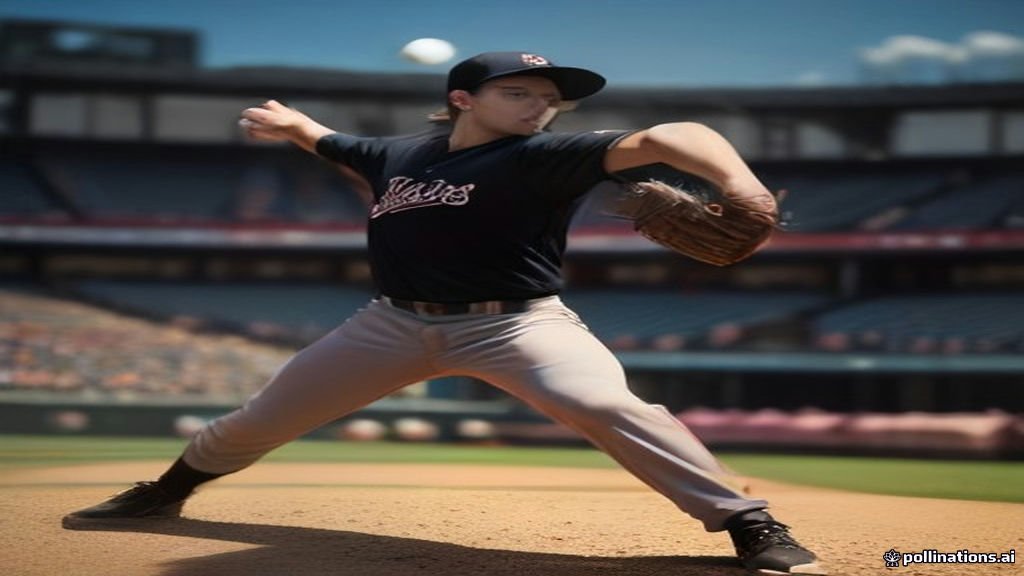
If height isn’t decisive, why do scouts obsess over it? Because they aren’t really scouting height — they’re scouting projection. A 6’4″ 17-year-old throwing 90 mph is interesting; the same kid at 6’4″ might be throwing 95 in three years once his frame fills out. Scouts call this “projectability,” and it’s why tall, athletic teenagers get drafted ahead of shorter players with better current stats.
But the industry has learned hard lessons about overvaluing size. For every lanky flamethrower who panned out, there’s a can’t-miss 6’6″ prospect whose long levers never produced a repeatable delivery. Modern scouting departments now pair physical projection with biomechanical analysis — measuring how a body actually moves rather than just how tall it stands. The smartest organizations in baseball draft athletes, not inches.
Frequently Asked Questions
What is the average height of a Major League Baseball player?
The average MLB player is about 6 feet 2 inches tall (approximately 188 cm), based on Stathead’s roster data for the 2025 season. The median height is also 6’2″, meaning half of all big leaguers are taller and half are shorter.
Which MLB position has the tallest players?
Pitchers are the tallest position group in baseball, averaging 6’2.5″ (189.2 cm). The tallest pitcher in recent seasons has been 6’11” Sean Hjelle.
Which MLB position has the shortest players?
Second basemen are the shortest, averaging 5’11.2″ (180.8 cm). The position has historically been home to the game’s smallest stars, including 5’6″ Jose Altuve.
Who is the tallest player in MLB?
In recent seasons, 6’11” pitcher Sean Hjelle has been the tallest player in Major League Baseball, tied with former pitcher Jon Rauch for the tallest in MLB history. Among everyday stars, 6’7″ Aaron Judge and 6’7″ Oneil Cruz are the tallest position players.
Who is the shortest player in MLB?
Jose Altuve, at 5’6″, has been the shortest everyday star in recent seasons. Among pitchers, 5’7″ Marcus Stroman has been one of the shortest in the modern game.
Do you have to be tall to play in the MLB?
No. Baseball is the most height-forgiving of America’s major team sports. Stars have thrived at every height from 5’6″ (Altuve) to 6’7″ (Judge), and 76 pitchers under six feet tall appeared in the big leagues in the 2024 season alone. Skill, not size, decides careers.
Are MLB players taller than NFL and NBA players?
MLB players (average ~6’2″) are about half an inch shorter than the average NFL player and a full five inches shorter than the average NBA player. They are about 4.5 inches taller than the average American man (5’9″).
Has the average MLB player gotten taller over time?
Yes. In the early 1900s, many players were under 5’10”. A peer-reviewed study of players from 1869–1983 found a mean height of about 5’11.6″. Today’s average of roughly 6’2″ reflects better nutrition, advanced training, and scouting that favors tall, projectable athletes — especially pitchers.
The Takeaway
The average height of a major league baseball player — about 6’2″ — tells you less than you’d think. The real story is the variety: a 16-inch gap between the tallest and shortest pitchers, a 13-inch spread among outfielders, and a league where 5’6″ second basemen and 6’7″ sluggers share the same field and the same highlight reels.
Baseball has never had an ideal body type, and the data says it probably never will. Height opens certain doors — extension on the mound, reach at first base — but the players who last are the ones with the skills no measuring tape can capture. That’s what makes the question interesting in the first place: in a sport of giants, the little guys keep winning too.
