
Quick Answer
Yes — South Carolina does have a helmet law, but it is a partial one. Under S.C. Code § 56-5-3660, every motorcycle operator and passenger under the age of 21 must wear a protective helmet approved by the South Carolina Department of Public Safety. Riders and passengers who are 21 or older are not required by state law to wear a helmet at all. Operators under 21 must also wear approved goggles or a face shield unless the motorcycle has an approved windscreen. Breaking the helmet rule is a misdemeanor, punishable by a fine of up to $100 or up to 30 days in jail.
Who Has to Wear a Helmet in South Carolina?
The short version is simple: your age decides it. South Carolina’s helmet rule is one of the narrowest in the country, and it draws a hard line at 21.
| Rider | Helmet required? |
|---|---|
| Motorcycle operator under 21 | Yes — DPS-approved helmet required |
| Motorcycle passenger under 21 | Yes — DPS-approved helmet required |
| Motorcycle operator age 21 or older | No — personal choice |
| Motorcycle passenger age 21 or older | No — personal choice |
| Moped operator or passenger under 21 | Yes — the law covers two-wheeled motorized vehicles, which includes mopeds |
| Three-wheeled motorcycle rider | No — the statute applies only to two-wheeled motorized vehicles |
| Bicycle rider (any age) | No — South Carolina has no bicycle helmet law |
The most common mistake people make is assuming the rule follows the bike instead of the rider. It does not. A 19-year-old passenger riding on the back of a bike driven by a 40-year-old still has to wear a helmet, even though the operator does not. The law covers operators and passengers alike, and it applies to every public road in the state. Private property is a different matter, but the moment you roll onto a public street, the age rule applies.
It is also worth knowing that the 21st birthday is the exact trigger. The statute says “under age twenty-one,” so a rider who turns 21 today may legally ride without a helmet tomorrow. There is no grace period, no learner exception and no way to buy your way out of it with extra insurance — unlike Florida, which lets riders over 21 skip the helmet only if they carry at least $10,000 in medical benefits coverage, South Carolina asks nothing extra of its adult riders. If you are doing the age math — for example, if you were born in 1999, you are 27 in 2026 — you are well past the cutoff.
The Law in Plain English: S.C. Code § 56-5-3660
The core of South Carolina’s helmet law sits in one statute, S.C. Code § 56-5-3660, titled “Helmets Must Be Worn by Operators and Passengers Under Age Twenty-One.” The statute makes it unlawful for any person under 21 to operate or ride as a passenger on a two-wheeled motorized vehicle without wearing a protective helmet of a type approved by the Department of Public Safety.
Two details in that sentence matter more than most riders realize. First, the helmet must be a type the Department of Public Safety approves. That is not a vague quality standard — it ties the legal requirement to a specific approval, and in practice it means a helmet that meets the federal DOT standard, FMVSS 218. A plastic novelty shell with a fake DOT sticker does not satisfy the law, and an officer who knows what to look for can spot one. Second, the helmet must be equipped with either a neck or a chin strap, and it must be reflectorized on both sides. Those two features are written into the statute itself, not left to regulation.
The statute also matters for what it does not say. It says nothing about adults, nothing about insurance, and nothing about the type of motorcycle beyond the two-wheel limit. That silence is deliberate. When the General Assembly rewrote this law in 1980, it chose to leave adults alone, and every attempt to restore a universal requirement since then has failed.
What the statute actually requires, piece by piece
- Who: every operator and passenger under 21 on a two-wheeled motorized vehicle.
- What: a protective helmet of a type approved by the Department of Public Safety.
- How it must be built: fitted with a neck or chin strap, and reflectorized on both sides.
- Where: on any public road in South Carolina.
- What it does not require: nothing at all from riders and passengers aged 21 or older.
If you are a parent of a teenage rider, this is the section to remember. Your 17-year-old with a motorcycle beginner’s permit must wear an approved helmet every single ride, and so must any passenger they carry who is also under 21. The permit, the license class and the size of the bike do not change that.
What Counts as a Legal Helmet in South Carolina?
Because the law points to Department of Public Safety approval, the practical question is how a rider knows a helmet qualifies. The answer is the federal DOT standard, FMVSS 218. A compliant helmet carries a DOT sticker on the back, is built with a thick inner liner of polystyrene foam (usually about an inch thick), weighs noticeably more than a novelty shell, and has a sturdy chin strap with solid rivets. The manufacturer must also label it with the model name, the size and the date of manufacture.
Novelty helmets are the trap here. They look like helmets, they are sold in motorcycle shops, and they often carry a DOT sticker that was never earned. The differences are visible once you know them: a novelty helmet is thin and light, has almost no inner foam, and its liner is a thin comfort pad rather than energy-absorbing foam. An officer can cite a rider under 21 for wearing one, because the law requires an approved type, not just something shaped like a helmet.
For riders over 21, none of this is a legal issue — the state does not check your helmet at all. But the same physics applies whether the law cares or not, which is why the safety numbers later in this article are worth reading even if you are legally free to ride bareheaded.
Helmet types and how they compare
| Helmet type | Protection level | Best for |
|---|---|---|
| Full-face | Highest — covers chin, jaw and face | Highway riding, long trips, new riders |
| Modular (flip-up) | High — full-face protection with a hinged chin bar | Touring riders who stop often |
| Open-face (three-quarter) | Good — covers head and ears, face exposed | City riding, cruisers, hot weather |
| Half helmet | Basic — covers the top of the head only | Legal minimum for some riders, least protection |
| Novelty / “beanie” helmet | None — no impact liner, not DOT compliant | Does not satisfy the under-21 law |
The safest choice is the one that covers the most of your head. In crash studies, the chin and face are among the most frequently struck areas, which is exactly what a full-face helmet protects and a half helmet leaves exposed.
Eye Protection: Goggles and Face Shields
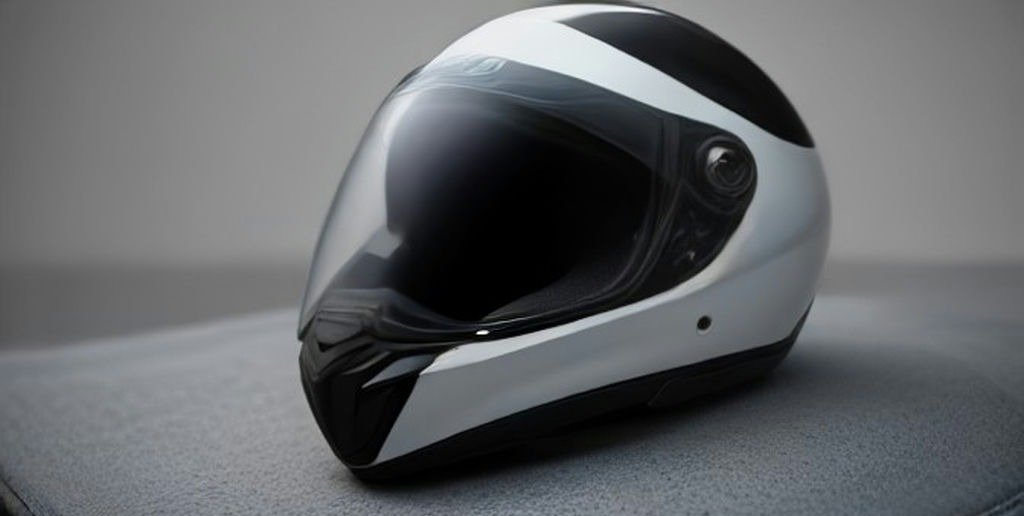
The helmet law has a companion rule that many riders miss. Under S.C. Code § 56-5-3670, anyone under 21 who operates a two-wheeled motorized vehicle must also wear goggles or a face shield of a type approved by the Department of Public Safety. This rule applies to operators only, not passengers — the helmet rule covers both, but the eye-protection rule is written for the person steering the bike.
There is one exception. Under S.C. Code § 56-5-3680, the goggle and face shield requirement does not apply if the motorcycle is equipped with a windscreen that meets Department of Public Safety specifications. In other words, a proper windscreen substitutes for goggles. A small fly screen or a decorative windshield that does not meet the specifications does not count, and it is the rider’s problem if it falls short.
The logic behind the rule is straightforward. At highway speed, a bug, a pebble or a gust of wind in the eyes can blind a rider for the second that matters. A helmet with a visor solves the problem automatically, which is one more reason full-face helmets are the practical default: they satisfy the helmet rule and the eye-protection rule in a single piece of equipment.
Eye protection rules at a glance
- Under 21, operating: goggles or a face shield required — unless the bike has an approved windscreen.
- Under 21, passenger: eye protection not required by this statute, but a helmet is.
- Age 21 or older: no eye-protection requirement under state law, though most experienced riders wear a visor or glasses anyway.
- Windscreen exception: only a windscreen meeting DPS specifications removes the requirement.
Who the Law Does Not Cover
The edges of the law are where most confusion lives, so here they are in one place.
Adults 21 and older. The largest group the law ignores. If you are 21 or older, South Carolina lets you ride a motorcycle without a helmet, without goggles and without a face shield. No insurance proof is required to exercise that choice, and no additional license endorsement is needed. The choice is yours, and it is also yours to live with — see the crash statistics below before you decide.
Three-wheeled motorcycles. The statute applies to “two-wheeled motorized vehicles” only. A three-wheeled motorcycle, such as a trike or a Can-Am-style vehicle, falls outside the helmet statute entirely, even for a rider under 21. Other rules — licensing, registration, insurance — still apply, but the helmet requirement does not.
Mopeds. The other side of the same definition. Because a moped is a two-wheeled motorized vehicle, the helmet rule covers moped operators and passengers under 21 exactly as it covers motorcycle riders. A teenager on a moped needs an approved helmet; a 25-year-old on the same moped does not.
Bicycles. South Carolina has no bicycle helmet law for any age. Children, adults, road bikes and e-bikes are all outside the statute. Some cities run helmet giveaway programs and schools encourage helmets, but no law requires one.
Out-of-state riders. Visitors are not exempt. The law applies to anyone riding on South Carolina roads, whatever license plate is on the bike. A rider from North Carolina, where helmets are required for everyone, who crosses into South Carolina and takes the helmet off at 21 is legal. A 19-year-old from Georgia who does the same is not — the under-21 rule follows the rider, not the home state.
A Short History: From Universal Law to the 1980 Repeal
South Carolina has not always had a partial helmet law. The state first required helmets for all riders in 1967, when the universal helmet law was enacted. For thirteen years, every motorcycle rider in South Carolina, regardless of age, had to wear one.
That changed on June 16, 1980, when the General Assembly amended the law so that it applied only to riders and passengers under 21. South Carolina was one of the first states to repeal a universal helmet law, and the change was driven by rider groups — notably ABATE of South Carolina — who argued that adults should be free to decide for themselves. The punishment for riding without a helmet did not change in 1980: it stayed a fine of up to $100 or up to 30 days in jail. What changed was who could be punished. Since that day, adults 21 and older have been free to ride bareheaded, and no later legislature has restored the universal rule.
The debate did not end in 1980. In 2008, the City of Myrtle Beach — famous for its spring motorcycle rallies — passed its own city-wide helmet ordinance requiring helmets for all riders inside city limits. The ordinance was challenged, and in 2010 the South Carolina Supreme Court struck it down, ruling that state law preempts local helmet rules. The message was clear: helmet policy in South Carolina is the state’s business, and cities cannot write their own version of it. The ruling also means that no South Carolina city or county can impose a helmet requirement that the state has chosen not to impose.
That history is worth knowing because it explains why the law looks the way it does. South Carolina’s helmet rule is not an accident or an oversight. It is a deliberate, decades-old policy choice, defended in court, and it is unlikely to change without a major shift in the legislature.
Penalties for Riding Without a Helmet Under 21
Violating the helmet, goggle or face shield statutes is a misdemeanor under S.C. Code § 56-5-3700. The same penalty section also covers selling helmets, goggles or face shields that are not approved. Here is what a conviction can bring:
| Penalty | Maximum |
|---|---|
| Fine | Up to $100 |
| Jail | Up to 30 days |
| Charge type | Misdemeanor |
| Applies to | Helmet, goggle and face shield violations; selling unapproved equipment |
In practice, most first-time offenders receive a fine rather than jail time, and a citation is the usual outcome of a traffic stop. But the misdemeanor label matters: it is a criminal offense, not a civil infraction, and it goes on the rider’s record. For a teenager, that is a heavy price for a missing helmet, and for a parent, it is worth a conversation before the first ride.
Two practical notes. First, the penalty applies per violation, and a rider stopped without a helmet and without the required eye protection can face both. Second, the fine is only the beginning of the cost. A crash without a helmet is far more likely to produce a head injury, and the medical bills that follow make a $100 fine look trivial — which brings us to the numbers.
South Carolina vs. Its Neighbors
Helmet laws in the United States fall into three groups. According to the Governors Highway Safety Association, 47 states have some type of motorcycle helmet law: 19 states require helmets for all riders, 28 states — including South Carolina — require them only for certain riders, and only three states have no helmet requirement at all. South Carolina sits in the middle group, and its neighbors show how different the rules can be just across a state line.
| State | Helmet rule |
|---|---|
| South Carolina | Partial — under 21 only |
| North Carolina | Universal — all riders, all ages |
| Georgia | Universal — all riders, all ages |
| Tennessee | Universal — all riders, all ages |
| Florida | Partial — under 21, or 21+ without at least $10,000 in medical benefits coverage |
| Virginia | Universal — all riders, all ages |
The practical consequence is that a rider can be perfectly legal in one state and in violation a few miles later. A 25-year-old riding bareheaded from Myrtle Beach into North Carolina breaks the law the moment they cross the state line, because North Carolina requires a helmet for everyone. Riders who tour the Southeast need to know the rule in each state they enter, not just their home state. The safest approach on a multi-state ride is simple: wear the helmet for the whole trip, and the state lines stop mattering.
South Carolina is also unusual in how little it asks of adult riders who choose not to wear one. Florida’s partial law at least conditions the choice on insurance coverage. South Carolina conditions it on nothing but age. That makes the Palmetto State one of the most permissive helmet-law states in the country — and, as the next section shows, one of the deadliest for unhelmeted riders.
The Safety Numbers: What the Crash Data Says
The law lets adults choose, but the crash data makes the choice look very different. The National Highway Traffic Safety Administration’s 2023 figures for South Carolina are stark, and they are the strongest argument in this article — stronger than any statute.
In 2023, 151 motorcyclists were killed in traffic crashes in South Carolina. Of those, 61 were wearing helmets, 86 were not, and 4 had unknown helmet status. That means 59% of the riders killed in the state were not wearing helmets, compared with a national average of about 35%. South Carolina’s unhelmeted share of motorcycle deaths was nearly double the national figure, and one of the highest rates in the country.
| 2023 South Carolina motorcycle deaths | Number |
|---|---|
| Total motorcyclists killed | 151 |
| Wearing a helmet | 61 |
| Not wearing a helmet | 86 |
| Helmet status unknown | 4 |
| Share not wearing a helmet | 59% |
| National share not wearing a helmet | About 35% |
Those numbers are not an outlier year. South Carolina ranked 14th in the nation for motorcycle fatalities in 2023, a high ranking for a mid-size state, and the pattern repeats year after year: in a state where most adult riders may legally ride without a helmet, most of the riders who die are the ones who did.
The national research points the same way. According to NHTSA, helmets are estimated to be 37% effective in preventing fatal injuries to motorcycle riders, and 41% effective for passengers. A proper DOT-compliant helmet — one that meets Federal Motor Vehicle Safety Standard 218 — dramatically reduces the risk of a fatal head injury. It does not make a crash survivable in every case, and it does not protect against every injury, but it is the single most effective piece of safety equipment a rider owns.
There is another number worth knowing: NHTSA’s 2023 data show that 39% of motorcyclist deaths happened in the dark, when a single headlight is harder for other drivers to judge. Night riding, unhelmeted riding and South Carolina’s long riding season add up to a risk profile that no rider should ignore. The law may not require a helmet, but the road does not care what the law says.
None of this is an argument that the law should change. It is an argument that the choice the law gives you deserves to be an informed one. Riders who understand that 86 of the 151 people killed on South Carolina bikes in 2023 were not wearing helmets are making a different decision from riders who only know that riding bareheaded is legal.
Does Riding Without a Helmet Hurt an Injury Claim?
This is the question that brings most people to a lawyer’s website, and the answer is more complicated than the helmet rule itself. The short answer: riding without a helmet does not prevent you from filing an injury claim after a crash, and it does not change who caused the accident. But it can complicate the claim, and in South Carolina the law on that point is genuinely unsettled.
South Carolina follows a modified comparative negligence rule, codified at S.C. Code § 15-38-15. Under it, an injured person can still recover compensation as long as they are found 50% or less at fault for the accident. If you are 51% or more at fault, you recover nothing. The at-fault driver’s insurance company cannot use your helmet decision to escape liability for a crash they caused — running a red light is running a red light, helmet or not. If you are 21 or older, riding without a helmet is legal, and a legal choice is not an admission of fault.
Where it gets murky is damages. The other side may argue that your head injuries would have been less severe — or would not have happened at all — if you had been wearing a helmet. Whether a jury is allowed to hear that argument is not settled in South Carolina. The key case is Mayes v. Paxton, 313 S.C. 109 (1993), in which the South Carolina Supreme Court discussed the consequences of failing to wear a motorcycle helmet in a personal injury claim. The court did not produce a clean, simple rule that later cases could apply without argument, and lawyers still litigate the point.
The contrast with seatbelts is instructive. South Carolina’s seatbelt statute, S.C. Code § 56-5-6540(C), explicitly says that a seatbelt violation is not admissible as evidence of negligence in a civil action. The motorcycle helmet statute contains no similar protection. That silence is exactly what makes the helmet question unsettled: the legislature protected seatbelt non-use from being used against an injured person, but it never did the same for helmets. Until it does, or until the Supreme Court settles the question, an injured rider’s helmet choice can become a live issue in court.
What this means for you in practice
- You can still file a claim. Riding without a helmet at 21 or older does not bar you from seeking compensation, and it does not make the other driver less at fault.
- Your damages may be challenged. The defense may argue your injuries were worse because you were unhelmeted, and South Carolina courts have not closed the door on that argument.
- The three-year clock still runs. South Carolina gives injured riders three years from the date of the accident to file a personal injury lawsuit under S.C. Code § 15-3-530. The helmet question does not extend or shorten that deadline.
- Document everything. If you are ever in a crash, helmeted or not, medical records, photos of the scene and the police report matter more than any argument about equipment.
None of this is legal advice — it is a summary of how the law works, and the details of any real case depend on its facts. If you are hurt in a crash, talk to a South Carolina personal injury lawyer before you talk to an insurance adjuster.

Riding Legally Without a Helmet at 21: A Practical Checklist
If you are 21 or older and you decide to ride without a helmet, you are within your rights. But legal and smart are not the same thing, and a few habits can keep a legal choice from becoming a costly one.
- Carry proof of your age. A 20-year-old and a 21-year-old look identical to a police officer. Your license settles the question in seconds.
- Know the state line. North Carolina, Georgia, Tennessee and Virginia all require helmets for every rider. Put the helmet on before you cross, not after.
- Wear eye protection anyway. The law does not require it for adults, but bugs and debris at 60 mph do not check your birth certificate. Sunglasses, riding glasses or a visor are cheap insurance.
- Check your insurance. Some policies have exclusions or reduced benefits tied to helmet use. Read your policy before you need it, not after a crash.
- Wear the rest of the gear. A jacket, gloves, boots and long pants do not replace a helmet, but they turn a slide into a story instead of a skin graft.
- Ride like you are invisible. Most motorcycle crashes are caused by other drivers who never saw the bike. Assume every car is about to turn across you, and ride accordingly.
- Keep your passenger legal. If your passenger is under 21, they need an approved helmet even if you do not. You are the one who gets cited if they are not wearing one.
And if you are a parent, a partner or a friend of a young rider, the most useful thing you can do is buy the helmet yourself. A good DOT-approved full-face helmet costs less than a single emergency-room visit, and it is the one gift that can save a life. The law requires it for riders under 21 — but the requirement is only the floor. The goal is a rider who wears it because they want to, not because they have to.
How to Pick a Helmet That Actually Protects You
Whether the law requires you to wear one or you are choosing to, a helmet only helps if it fits and if it is real. Use this checklist when you shop.
| Check | What to look for |
|---|---|
| DOT sticker | On the back of the helmet; check it is not a peel-and-stick fake |
| Inner liner | About an inch of firm polystyrene foam — press it; it should not feel like soft padding |
| Weight | A real full-face helmet has real weight; a suspiciously light helmet is a warning sign |
| Chin strap | Sturdy, with solid rivets and a working buckle |
| Fit | Snug all around, no pressure points, does not rotate on your head when you shake it |
| Visor | Clear, scratch-free, seals against the shell |
| Labels | Manufacturer name, model, size and date of manufacture inside the helmet |
| Age | Replace after a crash, or after about five years of regular use — foam degrades |
Try helmets on in a shop before you buy online, and wear one around the store for ten minutes. A helmet that hurts after ten minutes will be torture after two hours, and a helmet that lives on a shelf instead of on your head protects no one. Replace any helmet that has been in a crash, even if it looks fine — the foam inside crushes once, and it does not spring back.
Frequently Asked Questions
Is there a helmet law in South Carolina?
Yes. South Carolina has a partial helmet law. Under S.C. Code § 56-5-3660, riders and passengers under 21 must wear a Department of Public Safety-approved helmet. Riders 21 and older are not required to wear one.
Do you have to wear a helmet on a motorcycle in South Carolina if you are over 21?
No. Once you turn 21, South Carolina law does not require you to wear a helmet on a motorcycle. It is your personal choice. You also do not need to show proof of insurance to ride without one, unlike Florida.
What is the fine for not wearing a helmet in South Carolina?
If you are under 21 and ride without a required helmet, it is a misdemeanor under S.C. Code § 56-5-3700, punishable by a fine of up to $100 or up to 30 days in jail. Most first-time offenders receive a fine.
Does South Carolina require a helmet for passengers?
Yes, for passengers under 21. The law applies to operators and passengers alike. A passenger aged 21 or older is not required to wear one.
Do you need a helmet on a moped in South Carolina?
If you are under 21, yes. The statute covers two-wheeled motorized vehicles, which includes mopeds. Moped riders 21 and older are not required to wear one.
Do you have to wear a helmet on a three-wheeled motorcycle in South Carolina?
No. The helmet statute applies only to two-wheeled motorized vehicles, so three-wheeled motorcycles fall outside it entirely, even for riders under 21.
Is there a helmet law for bicycles in South Carolina?
No. South Carolina has no bicycle helmet law for riders of any age.
Can you ride a motorcycle without a helmet in Myrtle Beach?
Yes, if you are 21 or older. Myrtle Beach passed a city helmet ordinance in 2008, but the South Carolina Supreme Court struck it down in 2010, ruling that state law preempts local helmet rules. The state rule applies everywhere in South Carolina, including Myrtle Beach.
Does not wearing a helmet affect a motorcycle accident claim in South Carolina?
Riding without a helmet at 21 or older does not prevent you from filing a claim, and it does not change who caused the crash. But the defense may argue your injuries would have been less severe with a helmet, and South Carolina law has not settled whether that argument is admissible. The seatbelt statute expressly blocks that argument for seatbelts; the helmet statute does not.
Which states near South Carolina require helmets for all riders?
North Carolina, Georgia, Tennessee and Virginia all have universal helmet laws covering every rider. Florida, like South Carolina, has a partial law, but Florida requires riders 21 and older who skip the helmet to carry at least $10,000 in medical benefits coverage. If you ride across a state line, follow the stricter state’s rule.
The Bottom Line
So, is there a helmet law in South Carolina? Yes — but only for riders under 21. If you are under 21, the law is clear: wear a DPS-approved helmet with a chin strap and reflectors, and wear goggles or a face shield unless your bike has an approved windscreen. Break that rule and you face a misdemeanor, a fine of up to $100 and up to 30 days in jail.
If you are 21 or older, the state leaves the decision to you. That freedom is real, and it has been the law since 1980. But the crash data is also real: 86 of the 151 motorcyclists killed in South Carolina in 2023 were not wearing helmets, nearly double the national rate. The law gives you the choice. The numbers suggest what to do with it.
